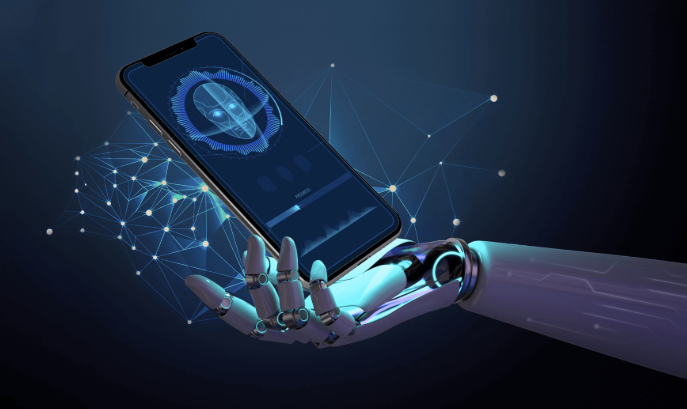
Mobile app development is undergoing significant transformation driven by advancements in technology. The integration of AI and ML enhances user personalization and predictive capabilities. Concurrently, AR and VR are redefining user engagement through immersive experiences. As the demand for cross-platform solutions escalates, a focus on user-centric design becomes paramount. This evolution raises critical questions about efficiency and the future of app deployment strategies. What implications do these trends hold for developers and users alike?
The Impact of Artificial Intelligence and Machine Learning
As mobile app development continues to evolve, the integration of artificial intelligence (AI) and machine learning (ML) has emerged as a transformative force, reshaping user experiences and operational efficiencies.
AI integration facilitates predictive analytics, allowing developers to anticipate user behavior and preferences. This capability not only enhances personalization but also optimizes resource allocation, ultimately empowering users with applications that adapt to their unique needs and preferences.
The Rise of Augmented Reality and Virtual Reality
The emergence of augmented reality (AR) and virtual reality (VR) technologies is revolutionizing mobile app development, providing immersive experiences that were once the realm of science fiction.
AR applications enhance real-world interactions, while VR gaming transports users into digital realms.
This evolution fosters interactive storytelling, enabling developers to create engaging narratives that captivate audiences, ultimately redefining user engagement in a liberated digital landscape.
The Importance of Seamless User Experience
User experience stands as a pivotal element in mobile app development, influencing user retention and satisfaction.
Prioritizing design simplicity allows developers to create intuitive interfaces that respond to user feedback effectively. This approach not only enhances usability but also fosters a sense of freedom, empowering users to navigate effortlessly.
As seamless experiences become the standard, the significance of user-centric design will only intensify.
See also: wolni-turf
The Growing Demand for Cross-Platform Development
With the rapid proliferation of mobile devices, the demand for cross-platform development has surged, driven by the need for businesses to reach diverse audiences efficiently.
This approach enhances code reusability, allowing developers to streamline their workflows and reduce time-to-market.
Moreover, cross-platform solutions offer significant cost efficiency, enabling companies to allocate resources wisely while maintaining high-quality user experiences across multiple platforms.
Conclusion
In conclusion, the landscape of mobile app development is increasingly dominated by AI and ML, with predictions indicating that by 2025, the market for AI in mobile apps will exceed $100 billion. This growth is complemented by the rise of AR and VR technologies, enhancing user engagement through immersive experiences. As developers prioritize seamless user experiences and cross-platform solutions, the future of app development promises to be more personalized and efficient, meeting the evolving demands of a diverse user base.


 By
By